
Half the Work Is Working. Figuring Out Which Half is Killing Us.
In 1885, department store magnate John Wanamaker lamented:
"Half the money I spend on advertising is wasted. The trouble is, I don't know which half."
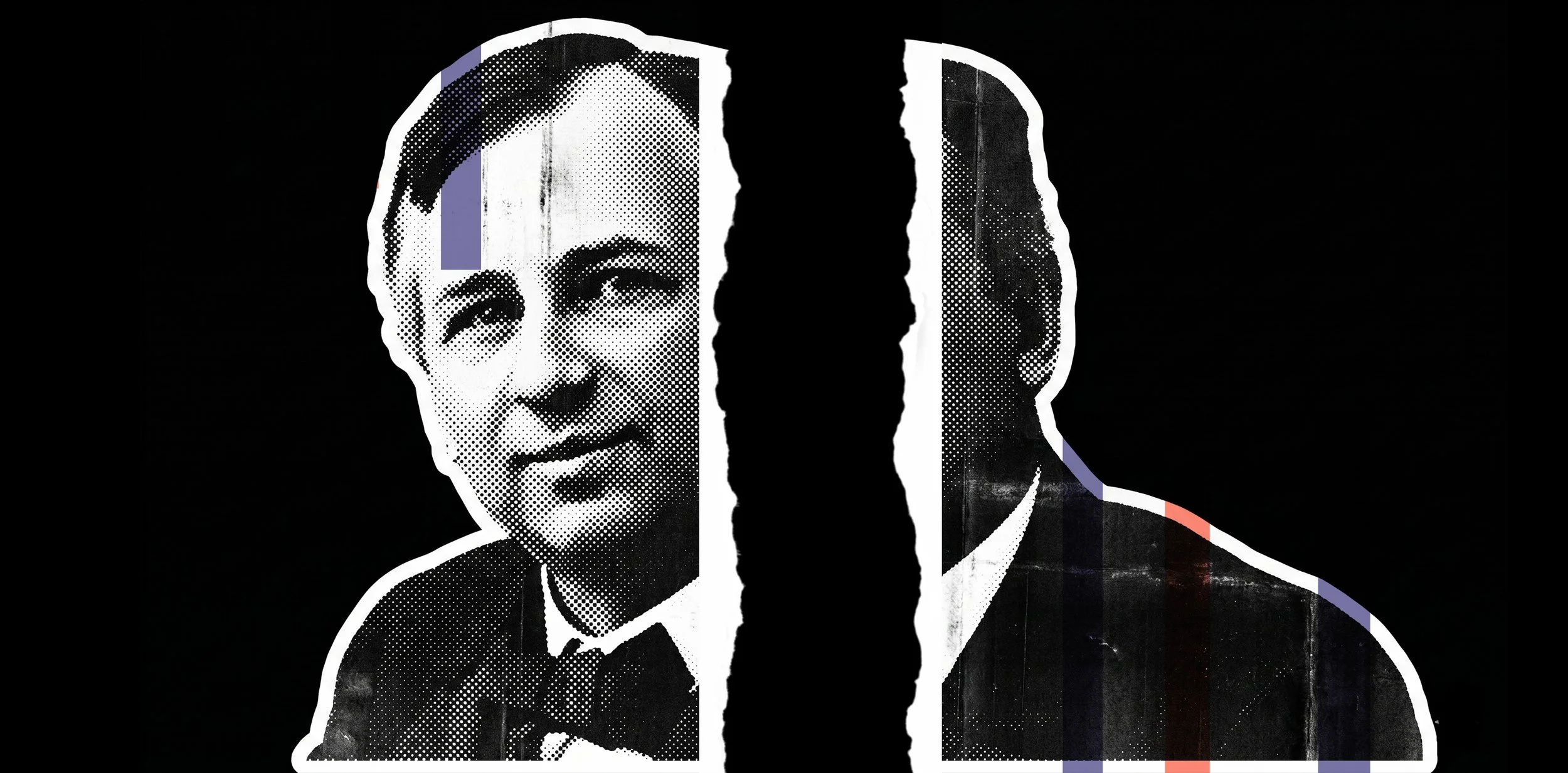
Wanamaker was all torn up about it.
Despite this apparent handicap, marketers spent the next hundred years building extraordinary, deeply beloved brands.
Coke created Santa. DeBeers convinced us to buy rocks and be happy about it. DDB made tiny Volkswagens cool. Nike got us off the couch, and Apple turned us into creators and rebels.
Then digital arrived and promised to finally lift the curtain on how much money we were wasting in the process. Every click trackable. Every conversion attributed. Every dollar accountable. We didn't just answer Wanamaker's question — we built an entire industry around answering it. And in doing so, we completely paralyzed ourselves.
The Clean Story Problem
Last-click digital attribution became the dominant framework not because it is the most accurate description of how customers make decisions, but because it tells a clean story. Spend went in here, revenue came out there. Good ads get more money, bad ads get less. A board can nod at that. A CFO can approve next quarter's budget based on it. It is tidy, defensible, and career-protecting.
It’s also bullshit.
Your customer does not convert in a straight line. They see your product at a friend's house. They notice your billboard on the way to work. They hear someone mention you at dinner. They go to a party you sponsor. They encounter your brand six more times in ways that leave no digital trace before they finally search for you, click an ad, or walk into a store and buy something. That last click, if it exists at all, gets 100% of the credit. Everything that actually built the relationship gets nothing — except defunded.
You’re not measuring your marketing. You are measuring the last thing that happened before someone opened their wallet, and calling it the whole story.
What the Data Actually Shows
According to Forrester's 2024 research, 90% of consumers see social media ads, but only 37% pay attention to them — and just 12% of older consumers, the ones with the most purchasing power, trust what those ads say. A separate 2025 Clutch survey found that 93% of consumers actively skip ads altogether.
A dashboard shows you none of that. It gives you impressions, reach, and click-through rates: the consumers who were technically exposed, not the ones who were actually moved. Among the people who disliked your ad least, it shows you what percent followed through to your website. The massive gulf between knowing who clicked and why someone actually loves your brand is precisely why you have to work so hard for every sale.
The Forest and the Trees
The trap of incremental ROI measurement is that it will always, structurally, favor the bottom of the funnel over the top. Retargeting outperforms prospecting. Conversion beats awareness. Performance beats brand. Each of those decisions looks rational in isolation. Collectively, they produce an engine that is extraordinarily efficient at harvesting existing demand and completely incapable of creating new demand.
You can optimize your way into irrelevance. Companies do it every quarter, with excellent attribution data to show for it.
Wanamaker didn't know which half was working, but he had the wisdom to keep investing in both. He understood, intuitively, that some of the work his advertising was doing would never show up in a ledger — and that this didn't make it less real.
The channels that are hardest to measure are often building the longest-lasting value: the billboard that makes your brand feel familiar before a customer ever needs you, the experience that earns affinity no retargeting campaign can manufacture, the sponsorship that quietly associates your name with something people already love. None of that has a like button. None of it feeds an optimal funnel. And so, for a generation of marketers who learned that data-driven decisions were the mark of sophistication, it gets cut.
The Question Worth Asking
The most important thing your marketing can do is make you a known and trusted entity long before the moment of purchase. If you believe in what you make and what you sell, optimizing exclusively for the last click sells you short — and your customers shorter.
Wanamaker's problem was never really a measurement problem. It was a patience problem. He was asking for certainty in a domain that runs on accumulated belief. We inherited his question, built tools that gave us the illusion of an answer, and forgot that the uncertainty was never the enemy.
The half you can't measure isn't wasted. It might be the half that's working best.