
“Modern” Marketing Is a Gamble. The Only One Winning Is the House
The house always wins. Not sometimes, not usually. Always. By design.
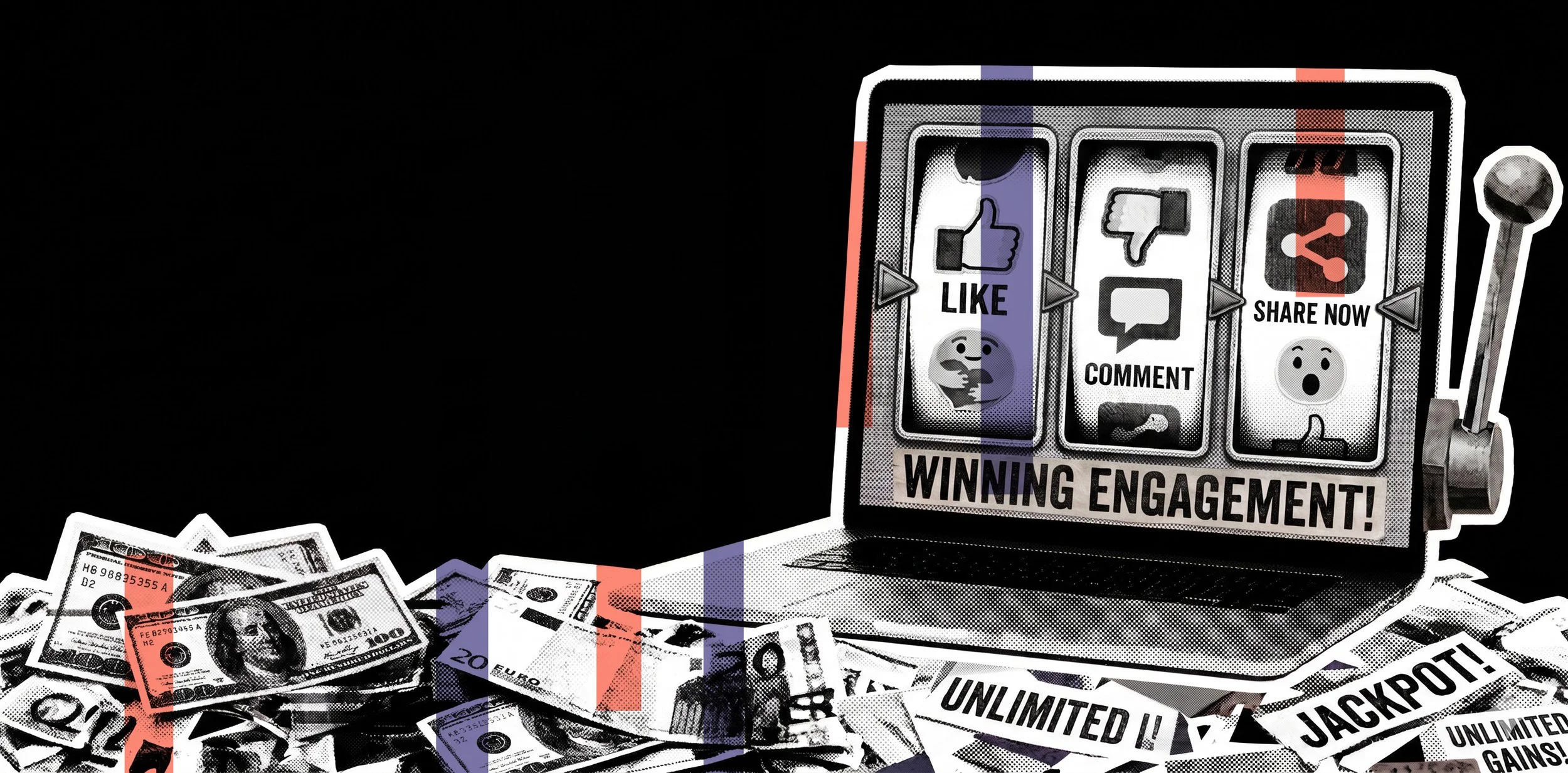
For all your spreadsheets and dashboards, Digital Marketing eventually amounts to this.
The entire architecture of a casino is built around this fact. The lights, the free drinks, the intermittent small payouts: all of it exists to keep you at the machine or table long enough for the math to do its work. The casino does not need you to win. It does not need you to lose catastrophically. It just needs you to stick around.
This is also now a frighteningly accurate description of how modern digital marketing channels work, and the sooner we can be honest about it, the sooner we can have a real conversation about what a sustainable marketing strategy actually looks like.
{Social} Media
There has already been a genuine golden era of digital/social media marketing, and it is important to understand why it happened, because its existence is now being used against us.
In the early years of Facebook, Instagram, YouTube, and eventually TikTok, the platforms were legitimately invested in the success of the brands and creators building on them. As newcomers to the advertising game seeking to displace entrenched media channels, our growth was their growth. Every brand that built a commerce engine on Facebook made Facebook more legitimate to other brands. The platform's incentive was to help you win.
That alignment is gone, and has been for some time. These platforms are beyond the point where any individual brand's success matters to them. They are now full fledged, unapologetic media networks — advertising inventory businesses — with nearly universal market penetration. Even their personnel reflect this: the people running these platforms today think, act, and speak like the broadcast executives of the 2000s, not the community builders of the 2010s.
As true media networks, their relationship to you is simple: you are a buyer of inventory. Your success is not their problem. Your failure is only a problem if it causes you to stop buying. As long as you keep pulling the lever, kept afloat by occasional wins and convinced that the jackpot is coming, the business model works perfectly.
For them.
The Ghosts of 2014
Why do we continually tolerate this? Primarily because so many of the people approving marketing plans and setting growth targets are the ones who built their careers in the golden era.
Every CEO, CFO, and CMO who came up in 2010s has a story (probably several) of a campaign that went organically viral, or a paid media spend that delivered 10x returns, or a brand that grew from obscurity to category dominance on the strength of social alone. That story is not just a data point for them, it’s an origin myth. It’s the proof that they understand modern growth and can generate it at gargantuan margins.
Now they’re in the chair, setting the same goals in an entirely different ecosystem. The economy is different. Consumer purchasing power is different. Most importantly, the platforms are structurally different. The CEO’s origin myth no longer matches their current reality. Spend is too high, ROI is too low, content and influencers are too expensive, and organic is underperforming.
So what happens? The marketer sitting at the machine gets rapped on the knuckles, asked to redo the plan, and told to pull the lever again. The executive standing behind them, eyes bright with the memory of 2014, can feel that the jackpot is close. It worked before, and it will work again. Easy growth is theirs for the taking if only this team was better at executing it… Maybe it’s time to replace the team…
You Think You're Wagering. You're Gambling.
Prior to 2000, Las Vegas was the domain of the working class. Fluorescent lights. $4.99 prime rib specials. Nearly 60% of casino revenue generated from slot machines.
Then, in 2003, ESPN shows Chris Moneymaker, an accountant from Tennessee who qualified through a $39 online tournament, winning $2.5 million at the World Series of Poker. Almost overnight, poker games and pay-to-play online tournaments pop up around the country, filled with overconfident would-be winners. It’s dubbed “the Moneymaker effect”. By 2005, WSOP entrants have grown tenfold, poker ratings on ESPN are outperforming the NHL, and Vegas is fast-tracking its reinvention as a luxury destination on the backs of young middle-class men convinced they are playing, not gambling.
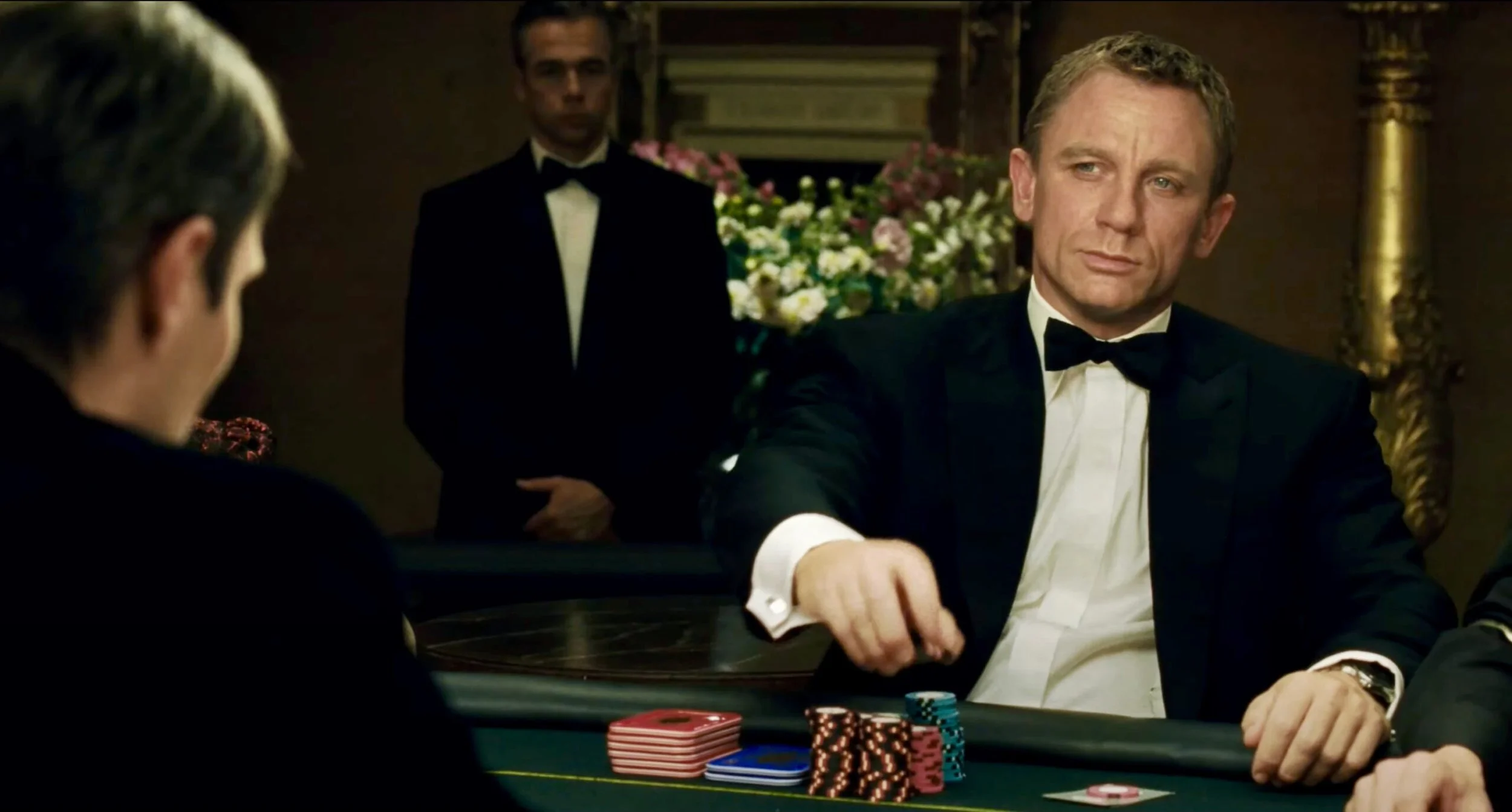
Not gambling. Managing the odds.
The difference between the two is a useful distinction. Poker, played at a high level, is an intellectual sport. Skill dominates variance over time. The best players win consistently because they have a genuine edge — the ability to read situations, manage probability, and make better decisions than their opponents.
The aspirational idea that a smart man plays, but doesn’t gamble, is so powerful that it is the central theme of the Bond-franchise-reviving Casino Royale in 2006.
The overconfident men who saw themselves as elite players that cracked the code at the poker table went on to thrive during the digital marketing boom of the 2010s, when it was genuinely harder to fail than to succeed. The platform was invested in their growth. Organic reach was essentially free. Businesses with no business model exploded in popularity. The success felt earned.
Two games. Two eras. One audience with the same psychology.
This is the modern executive: 57.7 years old, 85% white and male. A cohort shaped by two consecutive booms — poker and social media — that required confidence and pattern recognition, and rewarded the belief that being right once meant you possessed talent and understood something others didn't.
It would be unfair to call this a character flaw. Every generation is shaped by the conditions that made them. I know plenty of executives in their 40s and 50s who are not like this at all. I am one. And the growth of betting sites like Polymarket, Kalshi, FanDuel, and DaftKings prove this is not a trait of just one generation. But as a collective, the current executive class seems insistent on playing the only games they know, by the only rules they know, convinced they’re wagering against each other when they’re actually just gambling against the house.
What You Actually Own
Here is the question that should open every marketing strategy discussion: what do you actually own?
A social media audience is not an asset. It is a tenancy. The platform sets the terms, adjusts them without notice, and can — at any moment — change the algorithm in ways that render everything you’ve built effectively meaningless. There is no appeal process. There are no tenant protections. If you are a brand that is winning too much, there is no guarantee the house will not quietly tilt the table to keep you in check. You have no way of knowing, and you would have no recourse even if you did.
The things you own: your brand, your email list, your physical retail presence, your sponsorships, your relationships, your community, your offline messaging, your experiences, and your products themselves, are things that can’t be algorithmically taken away from you by a single monolithic source. They are the aspects of your marketing that can endure.
And yet, for most ‘modern’ businesses, meaningfully investing in owned or offline channels is treated as unsophisticated, wasteful, and passé. Executives dismiss the $7.58 return on every incremental OOH dollar because a billboard doesn’t have a like button that feeds into a dashboard that connects to your ecomm shop. They question why people love experiential marketing so much because the investment costs are higher and you can’t scale an event with the push of a button. And then they turn around and defend paid Meta spend despite an average ROI of $2.19 (a number that is almost certainly overstated by hungry attribution models) by saying that they know how to do better.
The channel that outperforms by nearly 4:1 gets dismissed by the ‘data-driven’ generation. The worst-performing channel in the room gets defended on the basis of holding out hope for magical growth that never materializes.
The Exit Ramp

Surfside, IRL.
Surfside — the Philly-born canned cocktail brand — did not build a $300 million business by mastering the Meta auction. They built it by putting their product in stadiums, at beach communities, and in the hands of people who would hand it to someone else. They invested in Citizens Bank Park. At the Jersey Shore. In Minor League Baseball parks across the country. They spend on planes pulling banners, Retail POP, parties, and any opportunity to put the product into physical spaces where it does what any good product does: demonstrates its own value to people who are in the right context to receive it.
That is not a social-free strategy. Surfside has a social presence. The point is not to disappear from the platforms. The point is to build something that does not depend on them — a marketing engine rooted in spaces and relationships that you control, where the asset is yours and the algorithm is far less relevant.
The most important question in a marketing strategy session is not "what is the projected ROI of our social mix?" It’s: "If Meta changed their algorithm tomorrow and our organic and paid reach dropped by 80%, would we survive?"
If the answer is no, you do not have a marketing strategy. You have a gambling problem, and the house, as always, is very happy to keep taking your money for as long as you are willing to sit there.
Build something you can own.
Rent a room at the casino and play a little if you want. But make sure you have a place to go home to when you’re done.