
Your Subscription Is Not A Strategy
It starts with a spreadsheet and a very tempting realization.
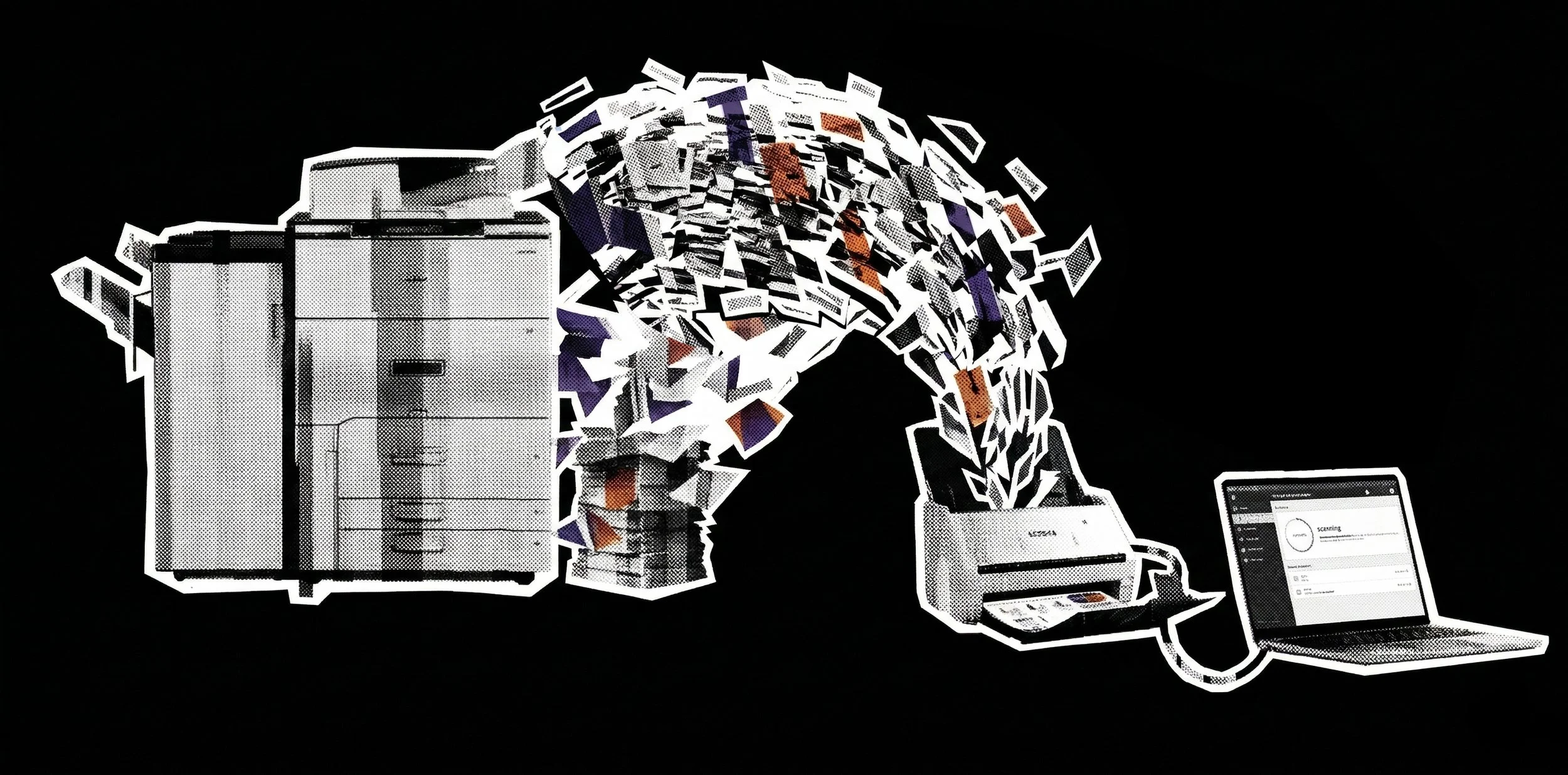
If you’re not careful, this could be your marketing strategy.
A CEO of a $20 million company looks at their marketing overhead—a team of fifteen, a mid-sized agency on retainer, and a constant stream of payroll for copywriters, designers, and strategists—and then looks at a $100-a-month subscription to Claude or ChatGPT. They look at their own process, using these tools to aid in their daily output, and an idea starts to form, reinforced by every "thought leader" post appearing in their LinkedIn feed.
On paper, the AI wins every time. It can produce more "content" in thirty seconds than a 30-person department can produce in a month. It can generate high-resolution imagery faster than a photographer or digital artist can even draft a proposal. It can outline a 40-page marketing plan and schedule a year’s worth of social media posts before your VP of Growth finishes parking their Mercedes and grabs their first cup of coffee.
If you evaluate your marketing based on output alone, the humans lose, and that’s when the RIFs start. But as a CEO or CMO, you cannot be in the business of buying "output." You are in the business of buying outcomes.
We are currently watching a dangerous trend unfold: the attempt to replace high-level expertise—and crucially the next generation of experts following them—with high-volume, high-profit machine execution. And while this "AI blitz" might work for a moment, it is leading the mid-market straight into a trap of commoditization that will be incredibly difficult to escape.
The Mirage of the "30-Person" Tool
The main attraction of AI right now is that it democratizes the production of the deliverable. You don’t need to be an expert to ask it the questions you don't know how to answer, and from the perspective of a non-expert, its outputs can seem remarkably comprehensive and informed.
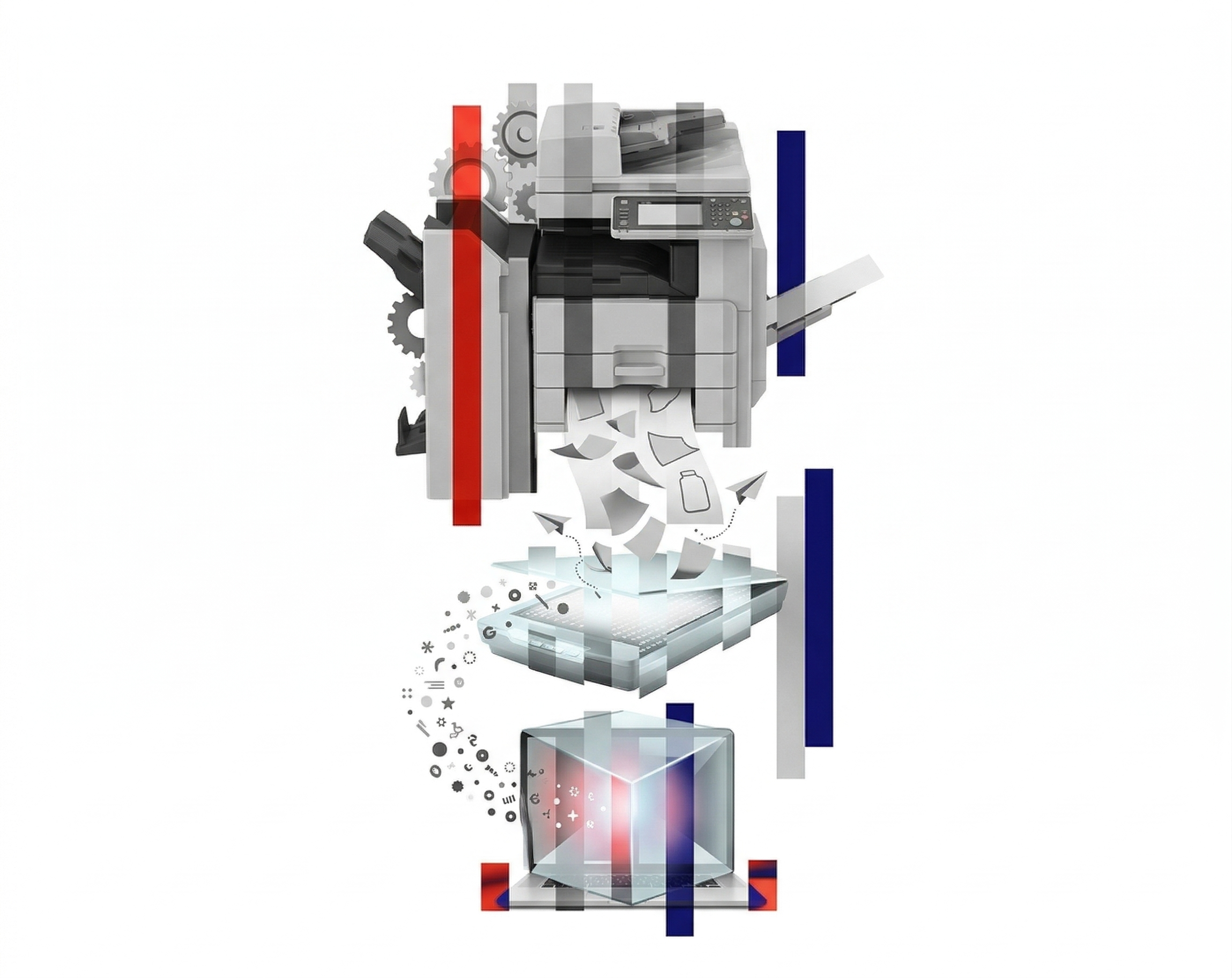
This was the image that Gemini’s NanoBanana produced using the same prompt that a human designer used to create the image under the title.
This isn't the first time we've seen this. When Photoshop and Illustrator were released, they took the physical labor and expertise of graphic design—the darkrooms, the exacto knives, the manual typesetting—and put it into a software box. Suddenly, a small business could produce a flyer that looked as clean as a Fortune 500 ad.
But ‘could’ is the most important word there. Adobe didn’t make everyone a designer. Far from it. It just set a new "floor" for what level of execution was perceived as acceptable. Practically overnight, hand-scrawled signs on poster board disappeared from store windows. In their place, however, came 8.5 x 11 bulletins set in Comic Sans atop clumsily edited stock images. The tool gave them the ability to create, but it couldn't teach them whether or not what they made was any good.
Today, AI is doing the same thing for strategy and execution. It provides a level of speed and analysis we’ve never seen before. As a marketing tool, it is an unprecedented advantage. But it is simultaneously giving the same advice, producing the same assets, and implementing the same changes for anyone that asks it to. As a marketing solution, it is essentially a high-powered, intelligent copy machine.
For a small retail shop doing $200,000 a year, "good enough" AI marketing is a massive upgrade. It levels the playing field for them, or maybe even gives them an advantage. But for the leader of a $20M company, "good enough" is a slow leak in your ship.
If your brand looks, feels, and speaks exactly like a business 1/100th your size, you are effectively destroying your equity. In an era of mass mass-manufacturing—where you can go on Alibaba and find someone to manufacture a knockoff of a physical product in less than a week—differentiation is the only thing that allows you to charge more, retain an audience, and protect your market share. When you sacrifice differentiation for "cheaper output," you trade your long-term growth ceiling for a high-margin, short-term floor.
The Blitz and the Baseline
For a short window, "blitzing" the market with AI-generated content and analyzing the results with AI-powered data science tools will feel like a superpower. You’re serving more, posting more, testing more, and spending less. But there is a mathematical certainty to what happens next: Everyone will catch up, and you will be unprepared (read: unstaffed) to innovate.
Just as the ability to source cheap manufacturing has become a market constant, and not a competitive edge, AI execution will follow suit. Your competitors will use the same tools with the same prompts to target the same audiences, reaching a point of absolute parity.
An AI is a machine. It can only look backward, not forward. It can predict the next likely word or pixel, not ideate them. It is a recapitulation engine. It cannot innovate; it can only iterate on what is already known. To outpace a competitor who is also using AI, you need something the machine doesn't have: Perspective.
The Pilots at the Helm
If your AI tool is spitting out better answers than your marketing team, you didn’t find a magical shortcut—you found out you have the wrong marketing team.
At A+R Studio, we don’t ignore these tools; we embrace them for the speed they provide. But we treat them like a high-performance engine that requires a world-class pilot. The value of a marketing agency or expert in 2026 isn't in their ability to write a caption or design a powerpoint slide; it’s in their ability to know if that caption or slide is actually right for the goal, and whether anyone else is saying or doing the same thing at the same time. Whereas the last decade of marketing expertise was defined by data analysis and iterative improvement, the next decade will be defined by the "lost art" of taste and the ability to recognize when a machine is leading you toward a generic dead end. The more of our brands we turn over to machines optimized for probability, the more humanity is lost from the experience. In a world of slop and noise, humanity may be the last true competitive advantage.
Every seasoned marketer knows that a conversion funnel can actually be too slippery. Efficiency is great, but sometimes you need "human friction"—moments of connection or brand personality that prevent customers from feeling like they’re making a mistake. People inherently grasp for a sense of comfort and surety that an AI’s "logic-first" approach can only replicate, never truly understand.
In the end, many will argue that the trade-off is worth it. A cost-savings in the millions might offset category conformity for months or even years. But running your business based on a machine’s probabilistic instructions, with no expertise filtering the output and no humanity injected into the process, ensures you will be woefully unprepared for the day a competitor decides to put pilots back at their helm.
The Question for the Boardroom
As a leader, you have to ask yourself: Is our current marketing a unique reflection of our vision, or is it a version of what every other company is doing, simply painted in our brand colors? Is how we interact with our audience rooted in understanding how they think, or just how they swipe and click? Are we being perceived as the sort of business that we would actually want to buy from?
If a well-prompted AI can implement your plan without the input of true experts, you don't have a strategy—you have a subscription.
The floor has been raised. You can’t rely on scrappy upstarts to have a lousy website and lumbering competitors to have limited production dollars. The tools are here for everyone. Now, the real work begins. You need to find the people and the experts who can take those tools and use them to push off that floor and break through the ceiling that your competitors can’t even see yet.